
Sectors we serve
Education
Schools and campuses need dependable power and predictable costs. We install systems engineered for the long term, keeping classrooms, boarding and facilities running.
Why solar works here
- Predictable electricity costs, freeing budget for teaching.
- Reliable power for classrooms, boarding and facilities.
- Systems built to last the life of the campus.
How a school uses power
Schools and campuses use most of their power during the school day: classroom lighting, fans and air conditioning, computer labs, admin offices, kitchens and halls. Consumption falls sharply after hours, over weekends and through the holidays, and that pattern is the single most important factor in sizing a school system.
Boarding schools are different. Hostels add evening and early-morning loads for lighting, kitchens and heating, and they run around the clock in term. Sports facilities add their own loads, including evening floodlighting that solar alone cannot cover.
Interruptions disrupt teaching, exams and administration, and leave boarders without power. Budgets are set in advance, so rising tariffs come straight out of money meant for teaching. A properly sized system gives more predictable costs and keeps the critical parts of the school running.
Sizing for the holidays
A school system is easy to oversize. One sized to the term-time peak produces far more than the school needs in the long holidays, and where export is not permitted or not credited, that energy is simply not used. We size from at least twelve months of data, so the system works across the whole year rather than only in term.
Where the municipality's SSEG rules allow export, surplus holiday generation may earn a credit. Where they do not, the design limits export and the sizing reflects that from the start.
What we typically install
Rooftop PV on classrooms and halls
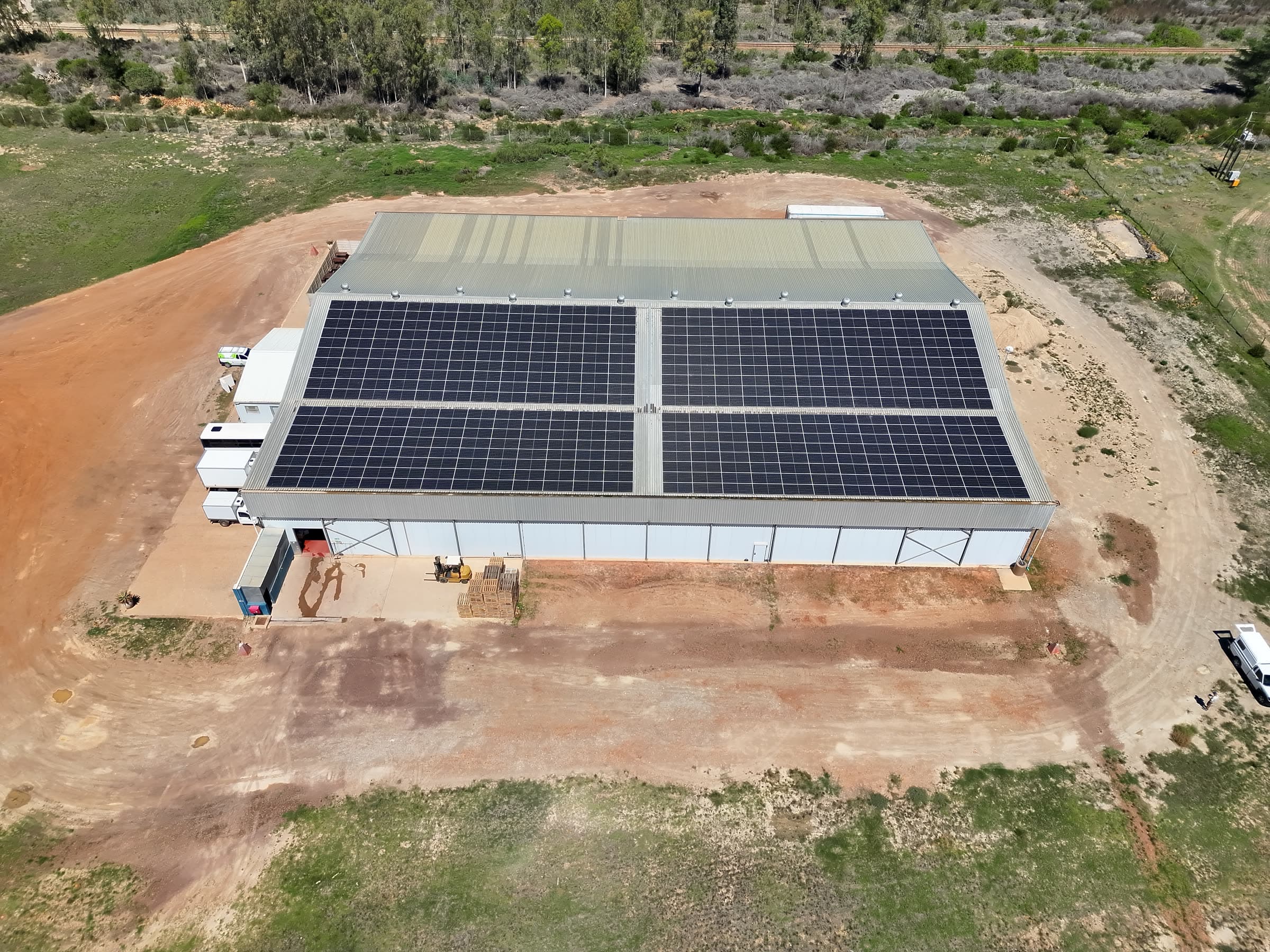
Long classroom blocks and school halls suit PV once their structure and age have been checked. A school we installed runs 60 kWp of PV.
Hybrid systems with storage
Batteries keep admin, IT, security and boarding loads running through interruptions.
Carports and shade structures
Solar shade structures over parking or assembly areas add generation where roof space is limited.
Monitoring
Remote monitoring gives the bursar and facilities staff clear data on production and consumption.
What we assess at a school
Consumption
- Twelve months of bills covering term time and holidays
- Boarding, kitchen and evening loads
- Critical loads: admin, IT, security and boarding houses
- Sports facility and floodlight loads
Site
- Structural assessment of classroom, hall and hostel roofs
- Available roof and ground area
- Shading from trees and adjacent buildings
- Supply capacity and the municipal or Eskom connection
Governance and safety
- Approval from the governing body or campus management
- Planned new buildings or campus expansion
- Access control, learner safety and scheduling work around the school calendar
Paying for it and maintaining it
Schools can use a PPA, an installment sale, rental or outright purchase. Many schools are tax-exempt, so the Section 12B allowance may not apply to them; a PPA or rental keeps the cost in the operating budget with no capital outlay. Independent schools and campuses with their own tax position can weigh outright purchase as well. We set the models out side by side for the governing body.
Heavier installation work and maintenance visits can be scheduled for weekends and holidays. Monitoring alerts our team to faults, and preventative maintenance keeps panels clean, connections sound and batteries healthy for the life of the system.
Education questions
Can installation happen during term?
Much of it can, with work areas fenced off and access controlled. Roof work near learners, crane lifts and the main board connection are scheduled for weekends or holidays.
Will solar keep the school running during load-shedding?
A grid-tied system will not. A hybrid system with storage keeps the loads it was designed for running, typically admin, IT, security and boarding.
What happens to the power generated during the holidays?
If the school cannot export, the inverters reduce output to match the load. This is why we size for the holiday months as well as term time.
Who needs to approve the project?
Usually the governing body or campus management, and in some cases the education department or the property owner. We provide the technical information those approvals need.
Planning a education installation?
Every system starts with a consult and site audit on your actual usage and load profile.
Power On!