
Sectors we serve
Mining
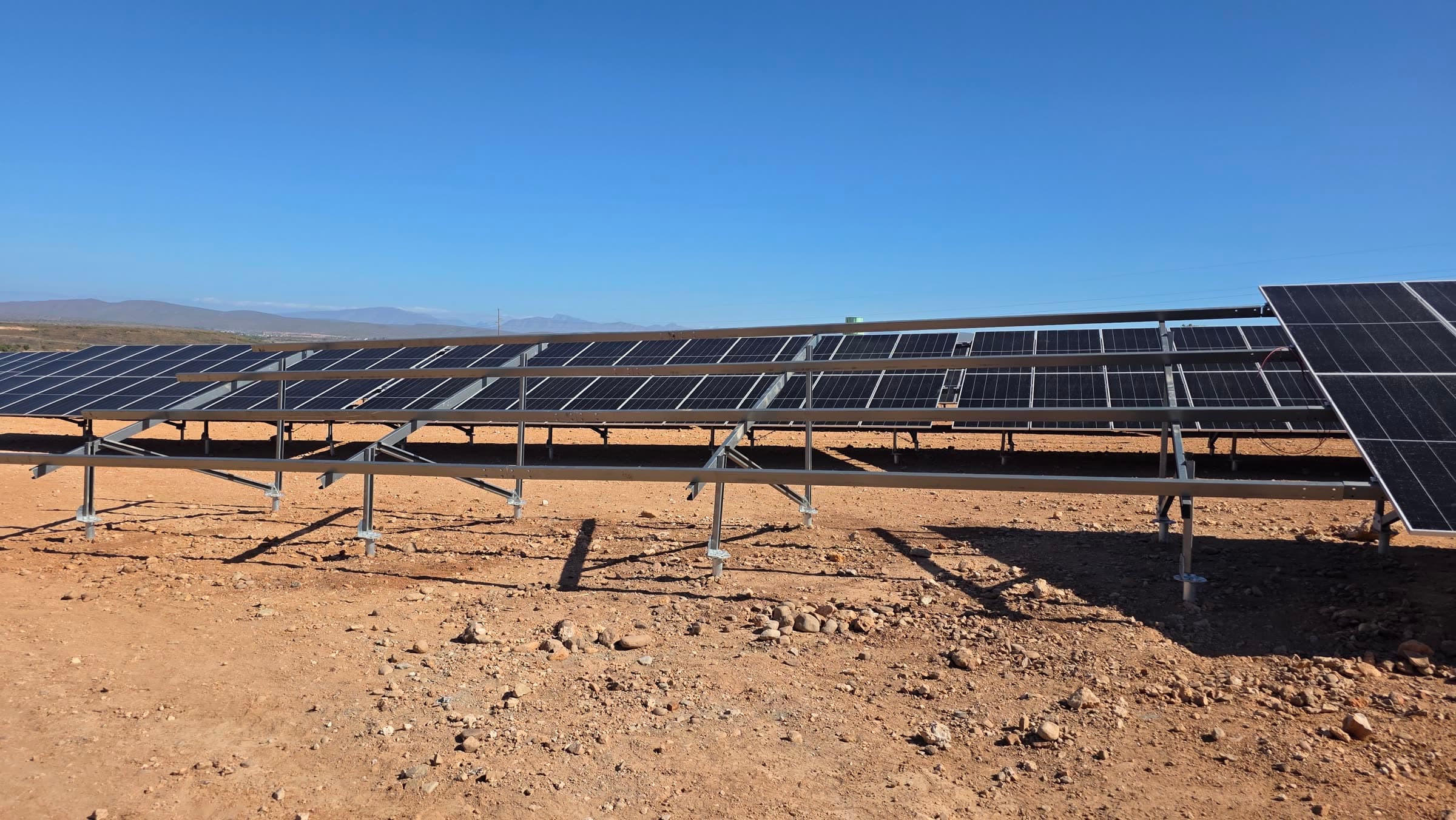
Mining and large ground-mount sites suit utility-scale solar. We deliver optimised ground-mounted PV for demanding, high-load operations across the region.
Why solar works here
- Utility-scale, ground-mounted PV for high-load sites.
- Optimised to reduce diesel and grid dependence.
- Engineered and maintained for tough operating conditions.
How a mine uses power
Mines and quarries run heavy, continuous loads: crushers, mills, conveyors, ventilation, pumping loads, workshops and accommodation, often across two or three shifts. Many sit at the end of constrained grid connections or entirely off grid, where diesel generation carries the site at a high and volatile fuel cost.
Solar cannot replace that supply on its own, and we would not suggest it should. What it does well is displace a large share of daytime diesel or grid energy, with battery storage smoothing the output and supporting critical loads. The result is lower fuel use, fewer generator running hours and a supply that is less exposed to fuel logistics and grid interruptions.
Our approach to mining
Mining is a sector we are equipped to serve rather than one we lead with. The engineering a mine needs, from large ground-mounted arrays and high-capacity inverters to battery storage and careful integration with the existing supply, is the same engineering behind our largest commercial work, including a commercial plant of 1 500 kWp with 950 kW of Sigenergy inverters and 3 000 kWh of battery storage.
We work across South Africa from our Gauteng and Garden Route branches, and in Zambia, Botswana, Mozambique and Lesotho. Every mining enquiry starts with the site's own data and constraints, and we tell you plainly where solar fits and where it does not.
What we typically install
Ground-mount PV
Ground-mounted arrays on land near the load, laid out for access, cleaning and future extension. Mine sites rarely have roof space to match their loads.
PV-diesel hybrid
PV integrated with existing generators through a controller that keeps gensets above their minimum loading while solar carries as much of the load as it safely can.
Battery energy storage
BESS that smooths solar output as cloud passes, reduces the number of generators that must run in reserve, and carries critical loads through faults.
Grid-tied plants
Where a site has a dependable grid connection, solar reduces daytime purchases within the limits of the connection agreement.
Monitoring and control
Remote monitoring of the PV plant, inverters, storage and generator interaction, with alarms to our team.
Designing for a harsh environment
Dust and soiling
Dust from haul roads, blasting and processing reduces output. Array placement, row spacing and a cleaning schedule are planned from the start.
Vibration and blasting
Structures, foundations and cable routes are designed with the site's blasting and heavy-vehicle activity in mind, and checked during maintenance.
Heat and exposure
Inverters and batteries are housed in ventilated or climate-controlled enclosures suited to high ambient temperatures.
Security and safety
Fencing, access control and site-specific safety requirements are part of the design, and our team works to the mine's induction and permit procedures.
What we assess on a mine site
Energy
- Twelve months of grid bills, or generator fuel and running-hour records
- Load profile by shift, including the starting demand of large motors
- Generator fleet: sizes, controllers and minimum loading
- Critical loads and the backup they need
Site
- Available land: area, terrain, ground conditions and distance to the load
- Grid connection capacity and utility agreements, where connected
- Dust sources, blasting zones and heavy-vehicle routes
- Life of mine and planned expansions or relocations
Paying for it and keeping it running
Mining systems can be structured as a PPA, an installment sale, rental or outright purchase. A PPA lets the operation pay for the energy produced at an agreed rate without committing capital, which suits sites with a defined life of mine. Outright purchase gives you the asset and, where the operation qualifies in South Africa, the Section 12B allowance. Cross-border projects are structured around the host country's own rules.
Maintenance on a mine is planned, not reactive. Remote monitoring flags faults early, and preventative maintenance covers cleaning matched to the site's soiling rate, structural and cable inspections, thermal scans and inverter, battery and controller servicing.
Mining questions
Can solar replace our generators completely?
Rarely, for a site running around the clock. Solar with storage can carry a large share of the daytime load and reduce generator running hours; the generators stay for night-time, peak and backup duty unless a much larger storage system is justified.
Our life of mine is shorter than 25 years. Does solar still make sense?
It can. Ground-mounted structures and containerised equipment can be designed for relocation, and a PPA term can be matched to the expected life of the operation. We look at this before proposing a design.
Do you work outside South Africa?
Yes. As well as projects across South Africa, we serve Zambia, Botswana, Mozambique and Lesotho.
Planning a mining installation?
Every system starts with a consult and site audit on your actual usage and load profile.
Power On!