
Sectors we serve
Retail
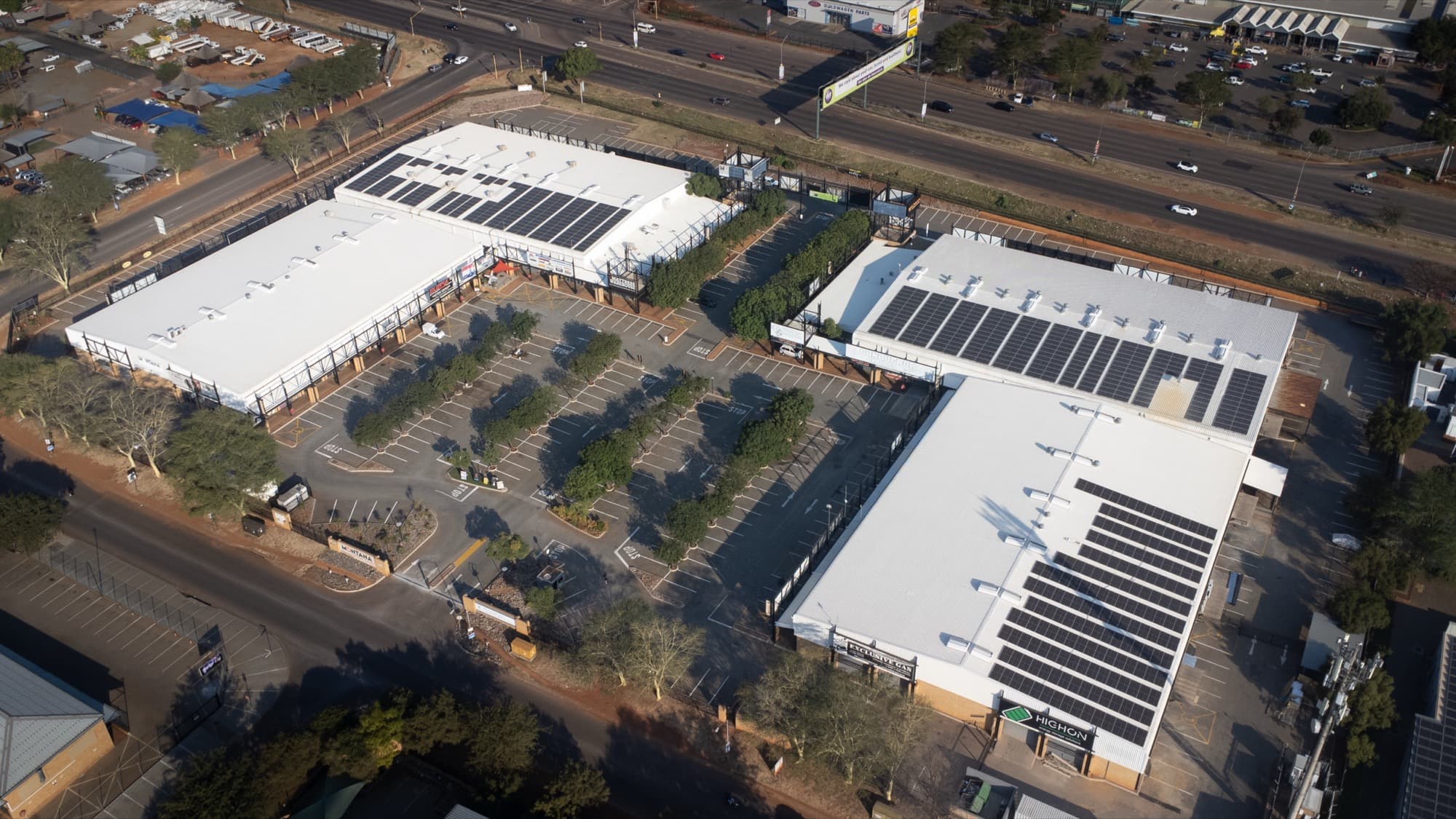
Malls, shopping centres and lifestyle centres carry heavy daytime loads across many tenants. Rooftop PV and storage reduce common-area running costs and help keep trading through outages.
Why solar works here
- Lower common-area and tenant running costs.
- Keep trading through load-shedding and grid interruptions.
- Systems engineered for large, mixed-use rooftops.
How a retail centre uses power
Shopping, lifestyle and convenience centres trade every day, often for long hours, with demand that climbs through the day as HVAC works harder and footfall rises. Common-area lighting and air conditioning, escalators, lifts, parking lighting and security all sit on the landlord's account, alongside the supply to every tenant.
Anchor tenants such as supermarkets carry heavy refrigeration that runs around the clock, so a centre has a substantial base load, a daytime peak and evening trading on top. That daytime profile suits solar, and the large flat or low-pitched roofs typical of retail buildings provide the space for it.
Interruptions hit retail directly. Tills, card machines, lighting and refrigeration must keep running for the centre to trade, and generators carrying a whole centre are expensive to fuel. Battery storage lets a centre keep trading on selected loads while reducing generator running hours.
What we typically install
Rooftop PV
Large roofs are laid out around HVAC plant, skylights and roof access, with walkways for safe maintenance.
Solar carports
Covered parking adds generation and shade where the roof is full or unsuitable.
Hybrid inverters and BESS
Storage sized to keep common areas, essential lighting, security and selected tenant supplies running, and to reduce demand peaks. A shopping centre we installed runs 280 kWp of PV with a 240 kW Atess inverter and 500/400 kWh of Freedom Won storage.
Monitoring and reporting
Production and consumption data the centre manager can use for operating cost reporting and tenant recoveries.
Tenants and metering
A centre is many customers behind one supply, so the commercial arrangement needs as much thought as the engineering.
Bulk supply and sub-metering
Most centres buy power through one bulk supply and recover it from tenants through sub-meters. Solar reduces the bulk energy purchased; how the benefit is shared with tenants is the owner's decision, and the metering design should support it.
Common areas
Common-area consumption is a direct cost to the owner, and it is often where the effect of solar is clearest.
Anchor tenants
Anchor tenants with heavy refrigeration may have their own supply or generator arrangements. We map which tenants sit on which supply before sizing.
Leases and approvals
Roof use, tenant leases, the centre's insurance and the managing agent's approval are part of the project from the start, not after design.
What we assess at a centre
Consumption
- Twelve months of bulk supply bills and, where available, interval metering data
- TOU tariff, demand charges and notified maximum demand
- The split between common-area and tenant consumption
- Generator capacity and which circuits it carries
Roofs and structure
- Structural assessment of each roof area
- HVAC plant, skylights and access routes that shape the layout
- Parking areas suitable for carports
- Shading from adjacent buildings and signage
Operation
- Trading hours and the loads that must stay on in an outage
- Main board layout, supply capacity and the utility connection
- Planned refurbishments, extensions or tenant changes
Paying for it and maintaining it
Centres can choose a PPA, an installment sale, rental or outright purchase. A PPA suits owners who would rather buy solar energy at an agreed rate than commit capital, while outright purchase gives the owner the asset and, where the owner qualifies, the Section 12B allowance. We model each option against the centre's bulk tariff and tenant recovery arrangements.
Maintenance is planned around trading. Roof work is scheduled to keep access routes clear and safe, monitoring alerts our team to faults, and preventative maintenance covers cleaning, inspections, thermal scans and inverter and battery servicing, with reports the managing agent can file.
Retail questions
Will solar keep the whole centre trading in an outage?
Usually not the whole centre, and we would not size it that way. Storage is designed for agreed loads, typically common areas, essential lighting, security and selected tenants, while the generator or grid covers the rest.
Do tenants have to agree?
Tenants are not usually party to a rooftop installation, but leases, recoveries and any change to their supply need to be checked. We work through this with the owner and managing agent before the design is final.
Can the installation happen while the centre is trading?
Yes. Roof work is planned around access routes and trading hours, and the short shutdown needed to connect to the main board is scheduled outside trading hours.
Planning a retail installation?
Every system starts with a consult and site audit on your actual usage and load profile.
Power On!